2013 kia sorento owners manual
Summary
Lost your 2013 Kia Sorento manual? Find a downloadable PDF here! Troubleshooting, maintenance & safety tips – all in one place. Get back on the road with confidence!

This manual provides essential information for 2013 Kia Sorento owners‚ covering operation‚ maintenance‚ safety‚ and warranty details—available online or as a PDF.
Overview of the Manual’s Purpose
The 2013 Kia Sorento Owner’s Manual serves as a comprehensive guide to understanding and operating your vehicle safely and efficiently. It details everything from basic controls and features to intricate maintenance schedules and troubleshooting procedures. This resource ensures owners can maximize their Sorento’s performance and longevity.
The manual also outlines important safety systems like airbags‚ ABS‚ and ESC‚ providing crucial information for responsible driving. Furthermore‚ it clarifies warranty details and specifications‚ empowering owners with knowledge about their vehicle’s coverage and capabilities. Accessing the manual‚ whether online or in PDF format‚ is vital for all Sorento drivers.
Where to Find the Official Manual (Online & PDF)
The official 2013 Kia Sorento Owner’s Manual is readily accessible online through various platforms like CarManualsOnline.info. You can view it directly in your web browser‚ eliminating the need for downloads. Alternatively‚ a downloadable PDF version is available for offline access and convenient printing.
Kia also provides access to manuals through their customer support channels. Searching online for “2013 Kia Sorento owners manual” will yield direct links to official sources. Genuine OEM manuals‚ sometimes including a protective case‚ can also be found through online retailers. Ensure you’re using a legitimate source for accurate information.

Vehicle Identification & Key Information
Locate your Sorento’s Vehicle Identification Number (VIN) and understand its trim level for accurate service and to access specific owner’s manual details.
Vehicle Identification Number (VIN) Location
The 2013 Kia Sorento’s Vehicle Identification Number (VIN) is crucial for identifying your specific vehicle and accessing important information like warranty details and recall notices. You can find this unique 17-character code in several locations. Look on the driver’s side dashboard‚ visible through the windshield.
Additionally‚ the VIN is located on the driver’s side doorjamb sticker and on your vehicle’s registration and insurance documents. It’s also often found on the engine block. Keeping a record of your VIN is essential for service‚ repairs‚ and verifying the vehicle’s history.
Understanding Your Sorento’s Trim Level
The 2013 Kia Sorento was offered in several trim levels‚ each with distinct features and equipment. These typically included the base model‚ LX‚ EX‚ SX‚ and Limited. Knowing your trim level is vital for understanding the specific features your vehicle possesses.
Higher trims generally offer upgrades like leather upholstery‚ advanced audio systems‚ navigation‚ and enhanced safety technologies. Refer to your vehicle’s documentation or the VIN decoder to confirm your exact trim level. This information is crucial when seeking service‚ ordering parts‚ or researching specific features.

Operating Your Vehicle
This section details essential driving procedures for your 2013 Kia Sorento‚ including starting‚ stopping‚ instrument panel functions‚ and control usage.
Starting and Stopping the Engine
Before starting your 2013 Kia Sorento‚ ensure the parking brake is engaged and the gear selector is in ‘P’ (Park) or ‘N’ (Neutral). Fully depress the brake pedal. For vehicles with a smart key‚ simply press the start/stop button while pressing the brake.
For traditional key ignition‚ insert the key and turn it to the ‘START’ position‚ holding it until the engine starts. To stop the engine‚ turn the key to the ‘OFF’ position or press the start/stop button. Always allow the engine to idle briefly before shutting off.
Understanding the Instrument Panel
The 2013 Kia Sorento’s instrument panel displays crucial vehicle information. Key indicators include the speedometer‚ tachometer‚ fuel gauge‚ and engine temperature gauge. Warning lights alert you to potential issues – check the owner’s manual for specific meanings.
The multi-information display may show trip data‚ average fuel economy‚ and outside temperature. Familiarize yourself with all icons and their functions for safe and informed driving. Pay close attention to any illuminated warning lights and address them promptly.
Controls and Features — Steering Wheel
The 2013 Kia Sorento’s steering wheel integrates several controls for convenience. These typically include audio system controls – volume‚ track selection‚ and radio tuning – allowing adjustments without taking your hands off the wheel. Cruise control buttons maintain a set speed on highways.
Many models feature Bluetooth controls for hands-free calling and audio streaming. The steering wheel may also house controls for the multi-information display. Refer to your owner’s manual for specific button layouts and functionalities related to your Sorento’s trim level.
Controls and Features ‒ Dashboard
The 2013 Kia Sorento’s dashboard houses essential controls. The climate control system‚ including temperature‚ fan speed‚ and airflow direction‚ is centrally located. The audio system head unit manages radio‚ CD player‚ and auxiliary input functions.
Various warning lights and indicators provide crucial vehicle information. Controls for features like the hazard lights‚ rear defogger‚ and potentially power windows/locks are also present. Consult your owner’s manual for detailed explanations of each dashboard element and its corresponding function‚ ensuring safe and informed operation.

Maintenance Schedule & Procedures
Regular maintenance‚ like oil changes and fluid checks‚ is crucial for your 2013 Sorento’s longevity. Follow the recommended schedule in the owner’s manual.
Recommended Oil Change Intervals
Maintaining proper oil levels and adhering to recommended change intervals are vital for the health of your 2013 Kia Sorento’s engine. The owner’s manual details specific schedules based on normal versus severe driving conditions. Generally‚ for normal driving‚ oil changes are suggested every 7‚500 to 10‚000 miles‚ or annually‚ whichever comes first.
However‚ severe conditions – frequent short trips‚ towing‚ dusty environments – necessitate more frequent changes‚ potentially every 3‚000 to 5‚000 miles. Always consult your owner’s manual for the precise interval applicable to your driving habits and ensure the correct oil type is used to avoid voiding your warranty.
Tire Pressure Monitoring System (TPMS)
Your 2013 Kia Sorento is equipped with a Tire Pressure Monitoring System (TPMS) designed to alert you when tire pressure is significantly low. A TPMS warning light on the instrument panel illuminates when pressure drops below recommended levels‚ enhancing safety and fuel efficiency.
The system doesn’t replace manual checks; regularly inspect tire pressure with a gauge. Proper inflation‚ found on the driver’s side doorjamb‚ is crucial. Resetting the TPMS may be required after inflation. Ignoring the warning light can lead to uneven wear and potential tire failure‚ so address it promptly.
Fluid Level Checks (Oil‚ Coolant‚ Brake Fluid)
Regularly checking fluid levels in your 2013 Kia Sorento is vital for optimal performance; Inspect engine oil using the dipstick‚ ensuring it’s between the minimum and maximum marks. Check coolant levels in the reservoir when the engine is cold—never open the radiator cap when hot.
Brake fluid levels should also be monitored‚ as low levels indicate potential leaks. Refer to your owner’s manual for specific fluid types and locations. Maintaining proper fluid levels prevents damage and ensures safe operation. Consistent checks contribute to longevity and reliability.

Safety Features & Systems
The 2013 Kia Sorento features airbags‚ ABS‚ and ESC for enhanced safety. Understanding these systems—detailed in the owner’s manual—is crucial for protection.
Airbag System Information
The 2013 Kia Sorento’s airbag system is a vital safety component‚ designed to provide occupant protection during certain collisions. This system includes front‚ side‚ and curtain airbags. The owner’s manual details airbag locations and operational characteristics.
It’s crucial to understand that airbags deploy with significant force and can cause injury if occupants are not properly restrained. Always wear seatbelts! The manual also outlines precautions‚ such as never placing rear-facing child seats in front of active airbags. Proper maintenance and awareness of the system’s limitations‚ as described in the manual‚ are essential for safe operation.
Anti-lock Braking System (ABS)
The 2013 Kia Sorento features an Anti-lock Braking System (ABS) designed to help maintain steering control during hard braking situations and reduce stopping distances. The owner’s manual thoroughly explains how ABS functions and what to expect when it activates – a pulsating sensation in the brake pedal is normal.
It’s important to remember that ABS doesn’t eliminate the need for careful driving. Maintain firm‚ steady pressure on the brake pedal during ABS activation. The manual details scenarios where ABS may not function optimally‚ such as on loose gravel or snow. Understanding these limitations ensures safe and effective braking.
Electronic Stability Control (ESC)
The 2013 Kia Sorento’s Electronic Stability Control (ESC) system helps prevent skidding and loss of control‚ particularly during emergency maneuvers or on slippery surfaces. The owner’s manual details how ESC works by selectively applying brakes to individual wheels.
A flashing ESC indicator light on the instrument panel signifies the system is actively working to stabilize the vehicle. Drivers should maintain steering input and avoid abrupt braking or acceleration when ESC engages. The manual also clarifies that ESC isn’t a substitute for cautious driving and may have limitations in certain conditions.
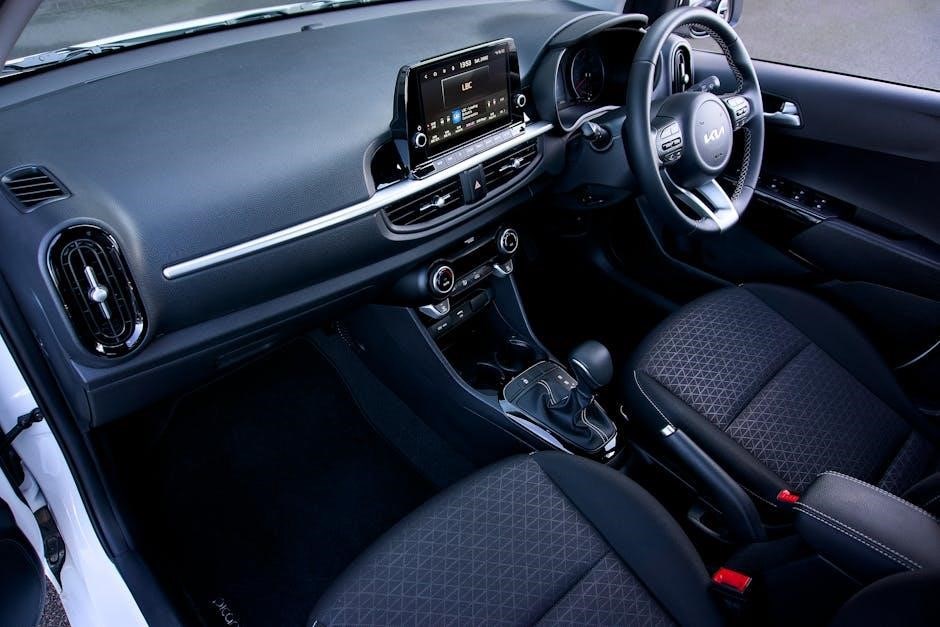
Seating & Interior Features
The 2013 Sorento manual explains seat adjustments‚ climate controls‚ and audio system operation for optimal comfort and convenience within the vehicle’s interior.
Adjusting Seats
The 2013 Kia Sorento owner’s manual details comprehensive instructions for adjusting all seating positions to ensure driver and passenger comfort and safety. It covers manual seat adjustments‚ including fore/aft positioning‚ seatback reclining angles‚ and height adjustments where applicable.
For models equipped with power seats‚ the manual illustrates the use of the control switches for precise adjustments. It also provides guidance on adjusting headrests for proper neck support and lumbar support adjustments for enhanced comfort during long drives. Proper seat positioning is crucial for optimal visibility and safe vehicle operation‚ as detailed within the manual.
Climate Control System
The 2013 Kia Sorento owner’s manual thoroughly explains the operation of the vehicle’s climate control system‚ encompassing both manual and automatic functionalities. It details how to adjust temperature settings‚ fan speed‚ and airflow direction for personalized comfort.
The manual clarifies the use of the air conditioning system‚ including recirculation mode for quicker cooling and defrost/defog settings for clear visibility. Instructions are provided for operating heated seats‚ if equipped‚ and understanding indicator lights related to the climate control system. Proper use ensures a comfortable cabin environment and optimal system performance.
Audio System Operation
The 2013 Kia Sorento’s owner manual provides detailed instructions on operating the vehicle’s audio system‚ covering AM/FM radio‚ CD player‚ and auxiliary input functionality. It explains how to tune into stations‚ adjust volume‚ and manage presets for favorite channels.
The manual also details the use of any integrated Bluetooth connectivity for hands-free calling and audio streaming. Instructions are included for navigating the system’s menus‚ adjusting sound settings (bass‚ treble‚ balance‚ and fader)‚ and troubleshooting common issues. Understanding these features enhances the driving experience.

Exterior Features & Lighting
The 2013 Sorento manual details headlight adjustment‚ windshield wiper operation‚ and exterior mirror adjustments for optimal visibility and safe driving conditions.
Headlight Adjustment
Proper headlight adjustment is crucial for optimal visibility and ensuring you don’t impair the vision of other drivers. The 2013 Kia Sorento owner’s manual provides detailed instructions on how to adjust your headlights‚ typically involving aiming screws located near the headlight housing.
These adjustments allow you to control the vertical and horizontal aim of the beams. The manual will guide you through the process‚ often recommending a specific distance and surface for accurate alignment. Incorrectly adjusted headlights can significantly reduce nighttime visibility and potentially lead to accidents‚ so following the manual’s guidance is essential for safety.
Windshield Wiper Operation
The 2013 Kia Sorento’s windshield wiper system offers various settings for different weather conditions‚ detailed within the owner’s manual. These include intermittent‚ low‚ and high speeds‚ alongside a windshield wash function. The manual explains how to operate the rear wiper and washer separately‚ enhancing rear visibility.
It also covers troubleshooting common wiper issues‚ such as streaking or uneven cleaning. Proper wiper blade maintenance‚ including regular inspection and replacement‚ is emphasized for optimal performance. Understanding these controls ensures clear visibility during rain‚ snow‚ or debris‚ contributing to safer driving conditions.
Exterior Mirror Adjustment
The 2013 Kia Sorento owner’s manual details how to adjust the exterior mirrors for optimal visibility‚ crucial for safe driving. Typically‚ adjustments are made using interior controls‚ allowing the driver to reposition the mirrors without physically reaching outside the vehicle.
The manual explains both manual and power-adjustable mirror options‚ if equipped. It emphasizes the importance of minimizing blind spots and properly setting the mirrors before each drive. Understanding these adjustments enhances awareness of surrounding traffic and contributes to overall road safety.

Troubleshooting Common Issues
The manual offers guidance on resolving typical problems like jump-starting and changing a flat tire‚ ensuring owners can handle minor roadside emergencies effectively.
Jump Starting Procedures
If your 2013 Kia Sorento’s battery is depleted‚ a jump start can get you going. The owner’s manual details a safe procedure‚ emphasizing correct cable connections—positive to positive‚ negative to ground.
It’s crucial to use jumper cables in the specified order to avoid sparks and potential damage. The manual advises ensuring both vehicles are switched off before connecting the cables. After a successful jump start‚ the manual recommends letting the Sorento run for a period to recharge the battery.
Always consult the manual for specific warnings and precautions related to jump-starting your vehicle.
Flat Tire Changing Instructions
The 2013 Kia Sorento owner’s manual provides detailed‚ step-by-step instructions for safely changing a flat tire. It emphasizes parking on a level surface and engaging the parking brake before beginning.
The manual illustrates the location of the spare tire‚ jack‚ and lug wrench. It guides users through loosening lug nuts‚ properly positioning the jack‚ and lifting the vehicle. After removing the flat‚ the manual explains how to mount the spare and tighten the lug nuts in a star pattern.
Always refer to the manual for torque specifications and safety warnings.

Warranty Information
The 2013 Kia Sorento’s manual details basic vehicle and powertrain warranties‚ outlining coverage periods and conditions for repairs or replacements.
Basic Vehicle Warranty Details
The 2013 Kia Sorento comes with a comprehensive basic vehicle warranty‚ providing coverage for defects in materials and workmanship; Typically‚ this includes coverage for five years or 60‚000 miles‚ whichever comes first. This warranty covers a wide range of components‚ ensuring peace of mind for the owner. It’s crucial to adhere to the recommended maintenance schedule‚ as failure to do so may void the warranty.
The manual provides specifics on what is covered and excluded‚ alongside details regarding claim procedures. Roadside assistance is also often included‚ offering support in case of unexpected breakdowns.
Powertrain Warranty Details
Kia Sorento’s 2013 powertrain warranty offers extended coverage for the vehicle’s most vital components – the engine‚ transmission‚ and drivetrain. This typically extends to ten years or 100‚000 miles‚ whichever occurs first‚ providing significant long-term protection. This warranty safeguards against costly repairs related to these core systems‚ offering owners substantial financial security.
Maintaining the vehicle according to the specified schedule is paramount to keep this warranty valid. The owner’s manual details the specific components covered and any limitations associated with the powertrain warranty.

Specifications
This section details the 2013 Kia Sorento’s engine specifications‚ dimensions‚ and capacities‚ providing crucial technical data for owners and service professionals.
Engine Specifications
The 2013 Kia Sorento offered several engine options. The base engine was a 2.4-liter inline-4 producing 170 horsepower and 164 lb-ft of torque. An optional 3.5-liter V6 engine delivered 276 horsepower and 248 lb-ft of torque‚ providing enhanced performance.
Furthermore‚ a 2.2-liter turbocharged diesel engine was available in certain markets‚ offering a balance of power and fuel efficiency. Transmission choices included a 6-speed automatic or a 6-speed manual‚ depending on the engine and trim level. These specifications contribute to the Sorento’s diverse driving experience.
Dimensions and Capacities
The 2013 Kia Sorento boasts a length of 189.0 inches‚ a width of 74.0 inches‚ and a height ranging from 66.1 to 68.1 inches‚ depending on the trim; Its wheelbase measures 106.3 inches‚ contributing to a stable ride.
Cargo capacity is substantial‚ offering 10.8 cubic feet behind the third row‚ expanding to 42.5 cubic feet with the third row folded‚ and a generous 72.9 cubic feet with both rear rows stowed. Fuel tank capacity is 18.5 gallons‚ supporting a respectable driving range.