blue signs display mandatory instructions
Summary
Keep your team safe & compliant! Explore our range of essential blue mandatory signs in the UK. Clear instructions, durable materials & fast delivery. Shop now!
Blue signs distinctly communicate mandatory instructions to drivers, ensuring road safety and efficient traffic flow; they are crucial for understanding legal requirements.
These signs, often circular, direct specific actions, like turns or speed limits, and guide drivers along designated routes for particular vehicle types.
What are Mandatory Instruction Signs?
Mandatory instruction signs, prominently featuring a blue background, are a vital component of traffic control systems globally. These signs aren’t suggestions; they explicitly instruct drivers on actions they must take. Unlike warning signs that alert to potential hazards, or prohibitory signs (often red) that forbid certain maneuvers, blue signs dictate required behaviors.
They encompass a range of directives, from minimum speed limits and lane usage to compulsory turn directions. A key characteristic is their positive nature – they tell you what to do, rather than what not to do. Recognizing these signs is paramount for safe and lawful driving, as disregarding them carries legal consequences.
The Significance of Blue Color in Traffic Signage
The consistent use of blue in traffic signage isn’t arbitrary; it’s a globally recognized convention signifying mandatory instructions. This deliberate color choice aids drivers in quickly and accurately interpreting road directives at a glance. Blue stands out, creating immediate visual recognition of signs demanding compliance.
Unlike red, which signals prohibition and demands immediate cessation of an action, blue promotes a positive command – a required action. This distinction is crucial for intuitive understanding while driving. The color’s association with authority and direction reinforces the imperative nature of the instructions conveyed, enhancing road safety and order.
Decoding the Blue Circle
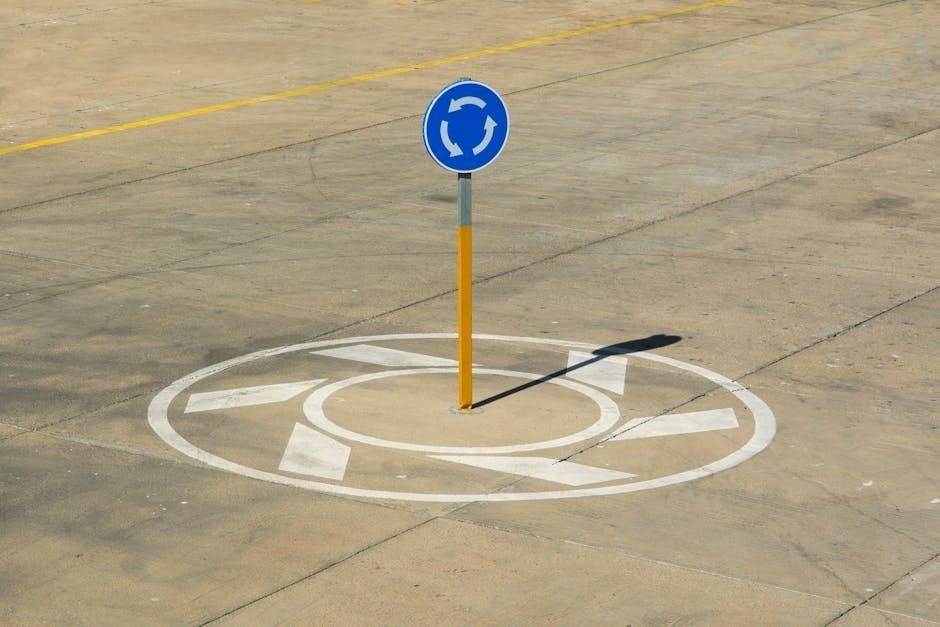
Blue circular signs universally indicate mandatory instructions; drivers must obey these directives, encompassing actions like turns or adhering to minimum speed limits.
The General Rule: Positive Instructions
Blue signs consistently operate under a fundamental principle: they convey positive instructions, dictating what drivers must do rather than prohibiting actions. This contrasts sharply with red signs, which signal prohibitions. The blue circle, therefore, doesn’t tell you what not to do, but rather what is required for legal and safe road usage.
These instructions can range from mandatory turn directions – left, right, or straight ahead – to specific speed requirements, like minimum speed limits on highways. Essentially, a blue sign’s presence signifies a directive that must be followed to comply with traffic regulations and ensure a smooth flow of vehicles. Ignoring these instructions carries potential legal consequences.
Blue Signs and Designated Routes
Blue signs play a vital role in guiding drivers along designated routes, particularly those intended for specific vehicle types or purposes. These routes aren’t simply suggestions; the blue coloration signifies a mandatory instruction to follow the indicated path. This is crucial for managing traffic flow and ensuring appropriate vehicle usage on certain roadways.
Often, these routes are established for trucks, buses, or other commercial vehicles, directing them away from residential areas or roads with weight restrictions. The consistent use of blue helps drivers quickly identify and adhere to these designated pathways, promoting efficiency and minimizing potential conflicts with other road users.
Exclusive Use Routes Indicated by Blue
Blue signs definitively mark routes designated for exclusive use by specific vehicle classes, representing a firm mandatory instruction. These aren’t suggestions; drivers must adhere to the indicated restrictions. This system efficiently separates traffic, enhancing safety and preventing damage to infrastructure.
Typically, these routes prioritize commercial vehicles, directing them along paths capable of handling heavier loads and minimizing disruption to local communities. Ignoring these blue-signed routes can lead to penalties, as they are legally enforced. The clarity of the blue color quickly communicates the restriction, ensuring drivers understand who is permitted – and not permitted – to utilize the roadway.
Specific Examples of Blue Mandatory Signs
Blue signs mandate actions like turns, minimum speeds, and lane usage, providing clear instructions; these directives are legally binding for all drivers.
Mandatory Turn Directions (Left, Right, Ahead)
Blue circular signs with arrow symbols clearly dictate required turn directions – left, right, or straight ahead – for drivers. These aren’t suggestions; they are mandatory instructions that must be followed to remain compliant with traffic laws. Disregarding these directives can lead to traffic violations and potential safety hazards.
The arrows are universally recognizable, minimizing confusion, and ensuring drivers navigate correctly. These signs are strategically placed well in advance of the turn to allow ample time for drivers to prepare and execute the maneuver safely. They are fundamental for directing traffic flow and maintaining order on roadways, especially in complex intersections or unfamiliar areas.
Minimum Speed Limits – Blue Circular Signs
Blue circular signs displaying a numerical value indicate mandatory minimum speed limits on specific roadways. Unlike maximum speed limits, these signs require drivers to maintain at least the posted speed, ensuring consistent traffic flow and preventing congestion. Lower speeds than indicated can be as problematic as exceeding limits, disrupting the rhythm of traffic.
These regulations are often implemented on highways or expressways where maintaining a certain speed is crucial for safety and efficiency. Drivers must adhere to these minimums unless conditions – like inclement weather or heavy traffic – necessitate a slower, safe speed. Ignoring these signs can result in fines and contribute to hazardous driving situations.
Mandatory Lane Usage – Blue Signs
Blue signs frequently dictate mandatory lane usage, directing drivers into specific lanes for particular maneuvers or vehicle types. These instructions are vital for managing traffic flow, especially on multi-lane highways and near interchanges. Arrows within the blue circle clearly illustrate the required lane direction – left, right, or straight.
Compliance ensures smooth merging, efficient toll collection, and safe access to exits. Ignoring these signs can lead to congestion, increased accident risk, and potential traffic violations. These directives are particularly common approaching highway exits or when lanes are designated for High-Occupancy Vehicles (HOV) or trucks.
Blue Signs vs. Other Regulatory Signs
Blue signs issue mandatory instructions, differing from red ‘prohibition’ signs and white ‘regulatory’ signs; understanding these distinctions is key for safe driving;
Distinguishing Blue from Red ‘Prohibition’ Signs
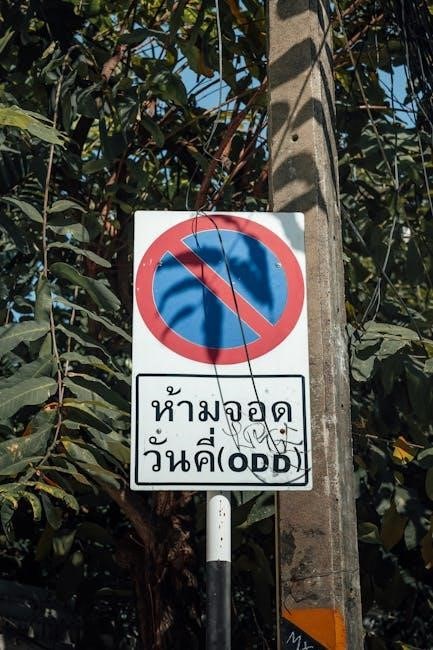
Distinguishing between blue mandatory instruction signs and red prohibition signs is fundamental for driver safety and legal compliance. Red signs, typically featuring a red circle with a diagonal line, explicitly forbid certain actions – think “Do Not Enter” or “No U-Turn.”
Conversely, blue signs, often circular, instruct drivers on actions they must take. They don’t prevent maneuvers; they require them. For example, a blue sign might mandate a turn or a minimum speed. Recognizing this core difference – prohibition versus instruction – is vital for interpreting road regulations correctly and avoiding potential violations.
Comparing Blue to White ‘Regulatory’ Signs
While both blue and white signs fall under the ‘regulatory’ category, their functions differ significantly. White regulatory signs generally convey laws and rules, often displaying speed limits or general instructions, but aren’t necessarily mandatory in the same direct way as blue signs.
Blue signs specifically denote actions drivers must perform – a direct instruction. White signs often inform of regulations, while blue signs demand compliance. Think of it this way: white signs state “Speed Limit 55,” while a blue sign might state “Keep Right.” Recognizing this nuance is crucial for accurate road interpretation.
Regional Variations in Blue Sign Usage
Blue sign implementation varies globally; standards differ between countries like the US, UK, and even within states like Oregon, impacting mandatory instruction displays.
Blue Sign Standards in the United States
In the United States, the Manual on Uniform Traffic Control Devices (MUTCD) governs the use of blue signs for mandatory instructions. These signs predominantly feature a white symbol or text on a blue background, clearly indicating actions drivers must take.
Generally, a blue circular sign denotes a positive command – such as a required turn direction (left, right, or ahead) or a minimum speed limit. These aren’t suggestions; they are legally binding directives. The MUTCD emphasizes consistency to minimize driver confusion across state lines, though slight regional adaptations can occur.
Furthermore, blue signs are utilized to designate routes exclusively for specific vehicle types, like trucks or buses, ensuring appropriate roadway usage and safety for all travelers. Adherence to these signs is critical for avoiding penalties.
Blue Sign Standards in the United Kingdom
In the United Kingdom, blue signs are fundamentally used to convey mandatory instructions to drivers, adhering to strict standards outlined by the Department for Transport. These signs typically present a white symbol or text within a solid blue circular background, immediately signaling a required action.
Unlike prohibition signs (red circles), blue signs dictate what drivers must do – whether it’s following a specific route, maintaining a minimum speed, or utilizing a designated lane. Consistency in design is paramount across the UK road network to ensure clarity and reduce ambiguity.
Driver education heavily emphasizes recognizing and obeying these directives, as non-compliance can result in fines and penalty points. The UK system prioritizes clear communication of mandatory actions through the distinctive blue signage.
Blue Sign Standards in Oregon (Specific Example)
Oregon, like other US states, employs blue signs to indicate mandatory instructions, aligning with the Manual on Uniform Traffic Control Devices (MUTCD) standards. These signs, often circular, feature white symbols or text against the blue background, clearly denoting required actions for drivers.
For instance, a blue sign displaying a curved arrow mandates a specific turn direction. Oregon’s Driver Manual emphasizes recognizing these signs as directives, not suggestions. Ignoring a mandatory instruction carries legal consequences, including potential fines.
The state prioritizes consistent application of blue signage to enhance road safety and ensure drivers understand their obligations. Oregon’s approach focuses on unambiguous communication of required actions through these distinctive signs.

Understanding Sign Shape and Symbolism
Circular shapes on blue signs universally signify mandatory instructions; symbols within clearly illustrate the required action, promoting quick driver comprehension.
The Role of Circular Shape in Mandatory Signs
Circular shapes are intrinsically linked to mandatory instruction signs, creating an immediate visual cue for drivers. This standardized design, frequently seen in blue signs, transcends linguistic barriers, offering universal recognition of required actions. The consistent use of circles doesn’t demand interpretation; it simply indicates a directive must be followed.
This contrasts sharply with other sign shapes – triangles warn of hazards, while rectangles convey general information. The circle’s inherent completeness suggests a closed loop of instruction: you must perform the action indicated. This intuitive design element significantly enhances road safety by minimizing driver confusion and promoting swift compliance with traffic regulations.
Common Symbols Used Within Blue Signs
Blue signs utilize universally recognized symbols to clearly convey mandatory instructions, supplementing textual information and enhancing comprehension. Arrows dictate turn directions – left, right, or straight ahead – while numerical values within a circle specify minimum speed limits. Pictograms of vehicles may indicate routes exclusively for specific types, like trucks or buses.
These symbols are carefully chosen for their clarity and ease of understanding, minimizing ambiguity for drivers of all backgrounds. The combination of the blue background and concise symbols creates a powerful visual message, ensuring quick recognition and adherence to the required action, ultimately promoting safer roadways.

Potential for Confusion and Misinterpretation
Blue signs, while intended for clarity, can sometimes cause driver uncertainty; comprehensive education and standardized design are vital to prevent misinterpretation of mandatory instructions.
Addressing Driver Uncertainty with Blue Signs
Addressing driver uncertainty regarding blue signs requires a multi-faceted approach, focusing on improved sign design and enhanced driver education programs. Clarity is paramount; symbols within the blue circles must be universally recognizable and unambiguous, minimizing potential for misinterpretation of mandatory instructions.
Regular review of sign placement and visibility is also crucial, ensuring they are easily seen and understood in all conditions. Furthermore, driver’s education materials should dedicate sufficient time to thoroughly explaining the meaning of various blue signs, emphasizing the legal obligations they impose. Consistent messaging across states and regions will further reduce confusion, promoting safer roadways for everyone.
The Importance of Driver Education Regarding Blue Signs
Driver education is fundamentally important for correctly interpreting blue signs and understanding their mandatory instructions. Many drivers, especially new ones, may not fully grasp the significance of these signs, leading to unintentional violations and potential safety hazards. Comprehensive training should cover not only the basic meaning of common blue signs, but also the nuances of less frequently encountered ones.
Emphasis should be placed on the fact that disregarding a blue sign carries legal consequences. Effective education utilizes real-world examples and interactive exercises to reinforce learning, ensuring drivers can confidently and correctly respond to these crucial regulatory signals on the road.
The Evolution of Blue Signage
Historically, blue signs evolved to clearly convey mandatory instructions, differentiating them from prohibitory red signs and informational signs, enhancing driver comprehension.
Modern designs prioritize clarity and consistency, adapting to evolving traffic management needs and technological advancements.
Historical Context of Mandatory Instruction Signs
Early traffic signage lacked standardized color-coding, leading to confusion regarding required actions. The introduction of blue as a dedicated color for mandatory instructions marked a significant turning point in road safety.
Initially, these signs were simpler in design, often featuring basic geometric shapes and minimal symbology. As traffic volumes increased and road networks became more complex, the need for clearer, more universally understood signage became paramount.
The adoption of the circular shape for many mandatory instruction signs further aided recognition, distinguishing them from other regulatory signs. Over time, refinements in materials, reflectivity, and symbol design have continually improved the effectiveness of blue signs in guiding drivers and promoting compliance with traffic laws.
Modern Trends in Blue Sign Design
Contemporary blue sign development focuses on enhancing visibility and clarity for all drivers. High-intensity reflective sheeting and larger font sizes are increasingly common, improving legibility, especially at night and in adverse weather.
Symbol standardization is another key trend, ensuring consistent meaning across different regions and countries. Designers are also exploring simplified symbology to reduce cognitive load and improve reaction times.
Furthermore, the integration of smart sign technology, allowing for dynamic messaging and real-time updates, represents a significant advancement. These innovations aim to make mandatory instruction blue signs even more effective in guiding traffic and promoting road safety.
Legal Implications of Ignoring Blue Signs
Disobeying mandatory instruction blue signs carries legal penalties, including fines and points on your license, potentially leading to increased insurance costs or license suspension.
Penalties for Disobeying Mandatory Instructions
Ignoring blue mandatory signs isn’t simply a matter of inconvenience; it’s a legal infraction with tangible consequences. Penalties vary significantly by jurisdiction, but generally include financial fines. These fines can range from modest amounts for minor infractions, like failing to adhere to a minimum speed limit, to substantial sums for more serious violations, such as disregarding a mandatory turn.
Beyond monetary penalties, points may be assessed against a driver’s license. Accumulating too many points can lead to license suspension or even revocation. Furthermore, a conviction for disobeying a traffic control device, like a blue sign, is often reported to insurance companies, potentially resulting in increased premiums; In cases where a violation contributes to an accident, drivers may also face civil liability.
Liability Concerns Related to Blue Sign Violations
Disregarding blue mandatory signs introduces significant liability concerns for drivers. If a driver fails to comply with a blue sign instruction and subsequently causes an accident, they are likely to be held legally responsible for any resulting damages or injuries. This responsibility extends to property damage, medical expenses, and potentially, pain and suffering.
Even without a collision, a driver violating a blue sign directive could face liability claims. For example, ignoring a “trucks only” route could result in penalties if the driver causes road damage. Establishing negligence is key; proving the driver should have known and followed the sign’s instruction strengthens liability claims against them.
Resources for Learning More About Traffic Signs
Official state driver manuals and online traffic sign guides provide comprehensive information about blue signs and their mandatory instructions for safe driving.
Official State Driver Manuals
Official state driver manuals are invaluable resources for understanding blue signs and the mandatory instructions they convey. These manuals, often available online or in print, offer detailed explanations of each sign’s meaning, ensuring drivers are well-prepared for road scenarios.
They typically include sections dedicated to traffic sign recognition, categorizing signs by color and shape, with specific attention given to the significance of the blue circle indicating a required action.
These manuals also cover legal implications, clarifying penalties for disregarding mandatory instructions displayed on blue signs, promoting responsible driving habits and enhancing road safety for everyone.
Online Traffic Sign Guides
Online traffic sign guides provide accessible and comprehensive information regarding blue signs and their mandatory instructions. Numerous websites offer interactive quizzes, detailed sign descriptions, and visual examples, aiding drivers in quickly recognizing and understanding these crucial road indicators.
These guides often categorize signs by color and shape, emphasizing the blue circle’s role in conveying required actions, such as specific turns or minimum speed limits.
Many resources also include explanations of regional variations and updates to sign designs, ensuring drivers remain informed about current traffic regulations and promoting safer driving practices.
Future of Blue Sign Technology
Future blue signs will integrate dynamic messaging and smart technology, adapting mandatory instructions in real-time for optimized traffic flow and safety.
Smart Signs and Dynamic Messaging
Smart blue signs represent a significant evolution in traffic management, moving beyond static mandatory instructions. These technologically advanced signs utilize sensors and connectivity to adjust displayed information based on real-time conditions.
Dynamic messaging allows for immediate updates regarding lane closures, speed reductions due to weather, or alternative route guidance. This adaptability enhances driver safety and reduces congestion. Imagine a blue sign altering a minimum speed limit based on icy conditions, or dynamically directing traffic around an accident.
Such systems improve the clarity of mandatory instructions, ensuring drivers receive the most relevant and timely guidance, ultimately contributing to a more efficient and safer road network.
Integration with Autonomous Vehicle Systems
Autonomous vehicles (AVs) rely heavily on accurate interpretation of traffic signs, and blue signs conveying mandatory instructions are critical for their safe operation. AVs are programmed to recognize and respond to these directives, ensuring compliance with traffic laws.
Integration involves sophisticated computer vision and machine learning algorithms that precisely identify sign types and associated commands. This allows AVs to automatically adjust speed, lane position, or direction based on the mandatory instructions displayed.
Reliable interpretation of blue signage is paramount for seamless AV integration into existing transportation infrastructure, fostering a future of safer and more efficient roadways.